

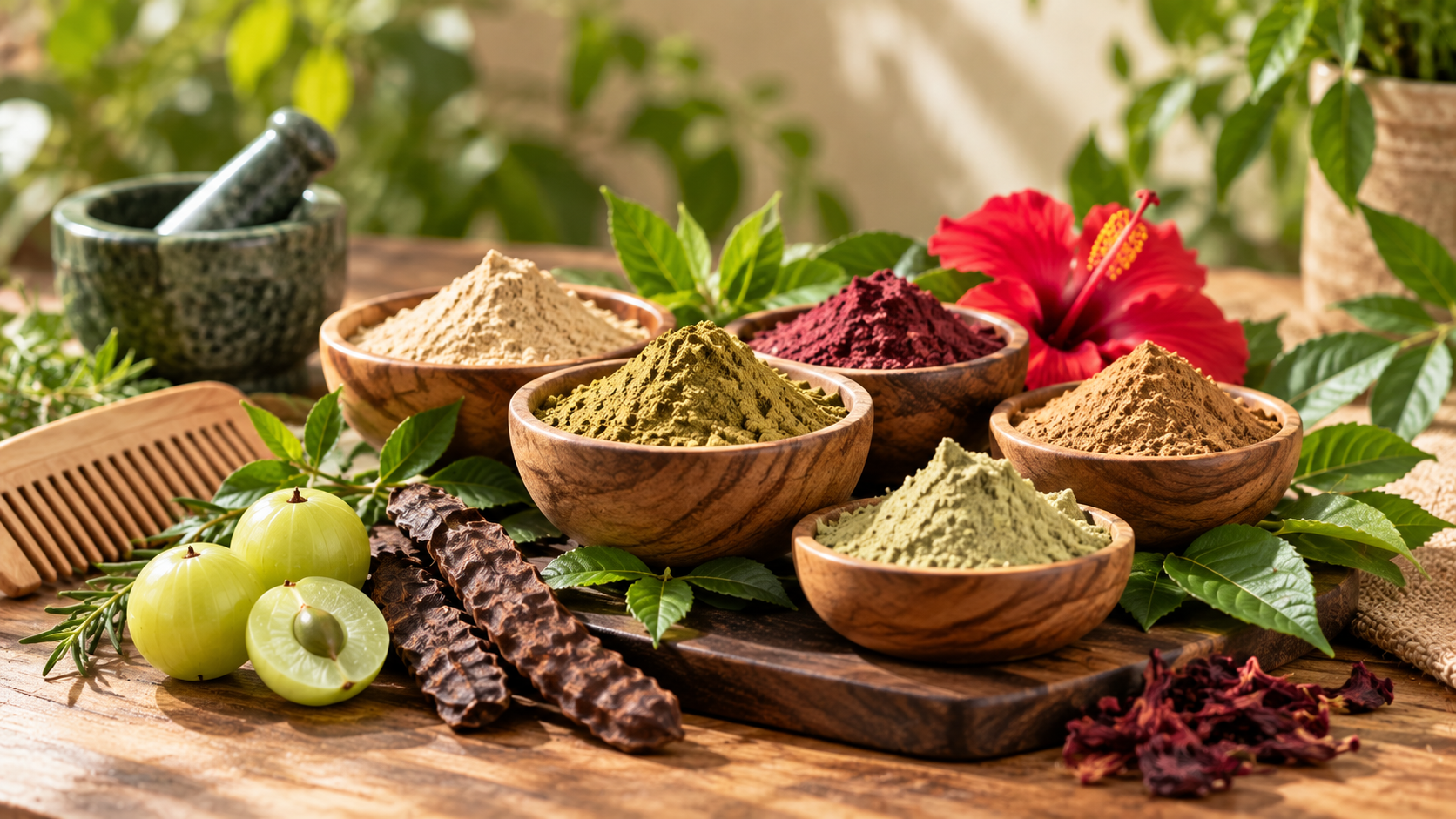
What Are Herbal Powders? A Beginner’s Guide
andled according to the product’s specific instructions.
When buying a herbal powder, look beyond the word “natural.” Check the ingredient name, quantity, intended use, directions and storage information provided by the manufacturer.
What Are Herbal Powders Used For?
Herbal powders can be incorporated into different routines depending on the individual ingredient.
1. Hair Care
Several traditional Indian herbs are commonly used in hair-care preparations.
Amla, Bhringraj, Hibiscus, Shikakai, Reetha and Henna are examples of ingredients associated with traditional hair-care practices.
They may be used individually or as part of a traditional herbal preparation.
Satvayu’s Hair Care collection currently includes products such as Amla Powder, Bhringraj Powder, Hibiscus Powder, Henna Powder, Indigo Powder and an Amla-Reetha-Shikakai blend.
2. Skin Care
Some herbal powders are also used in traditional skin-care routines.
Neem, Multani Mitti, Sandalwood and Amla can be found in traditional DIY face-pack and personal-care practices.
For example, Satvayu’s Skin Care collection includes Multani Mitti, Neem, Sandalwood and other botanical ingredients.
3. Everyday Wellness
Some herbal powders are traditionally incorporated into wellness routines.
Ingredients such as Moringa, Ashwagandha and Triphala are examples of powders commonly associated with traditional Indian wellness practices.
However, the intended use of each ingredient is different. Always check the product label and directions before using a powder internally or externally.
Popular Herbal Powders for Beginners
If you’re completely new to herbal powders, it can be difficult to know where to start.
Here are some commonly used ingredients and their traditional applications:
Amla Powder
Amla Powder, also known as Indian gooseberry, has a long history in traditional Indian wellness and beauty practices. It is commonly used in hair-care preparations and DIY masks.
Bhringraj Powder
Bhringraj is traditionally associated with Ayurvedic hair and scalp care. It is often incorporated into herbal hair masks and other preparations.
Hibiscus Powder
Hibiscus has traditionally been used in Indian hair and beauty routines and can be incorporated into DIY hair or skin-care preparations.
Neem Powder
Neem is a well-known traditional botanical ingredient commonly used in Indian personal-care practices, particularly skin and hair care.
Moringa Powder
Moringa leaf powder is commonly used as part of modern wellness routines and is also associated with traditional Indian use.
Shikakai and Reetha
Shikakai and Reetha are traditionally associated with herbal hair cleansing and are often used together with Amla in traditional hair-care preparations.
How to Choose the Right Herbal Powder
Choosing a herbal powder doesn’t have to be complicated.
Start by asking what you actually want to use it for.
For Hair Care
You may explore ingredients such as Amla, Bhringraj, Hibiscus, Shikakai or Reetha.
For Skin Care
Ingredients such as Neem, Multani Mitti or Sandalwood may be relevant to traditional skin-care routines.
For Wellness
Explore products according to their specific intended use, instructions and ingredients rather than choosing a powder simply because it is popular.
Most importantly, don’t assume that one herbal powder will work the same way for everyone.
How to Use Herbal Powders Safely
“Natural” doesn’t automatically mean that an ingredient will suit everyone.
Before introducing a new topical herbal powder:
- Read the product instructions carefully.
- Start with a small amount.
- Consider a patch test for topical preparations.
- Avoid applying products to broken or irritated skin.
- Keep powders away from the eyes.
- Store them in a cool, dry place.
- Stop using a product if you experience irritation.
For powders intended for consumption, follow the manufacturer’s directions and consider professional advice if you have a medical condition, take medication or have specific dietary or health concerns.
Can You Mix Different Herbal Powders?
Yes, traditional hair and skin-care practices often involve combinations of different herbs.
For example, Amla, Reetha and Shikakai are traditionally used together in some hair-care routines. Satvayu also offers a 3-in-1 Amla, Reetha & Shikakai Herbal Hair Powder designed around this traditional combination.
However, beginners don’t need to mix several ingredients immediately.
Starting with one product makes it easier to understand how your hair, skin or routine responds.
Herbal Powders vs Ready-Made Products
One advantage of herbal powders is their versatility.
A powdered ingredient can sometimes be mixed with a suitable base or other ingredients depending on its intended use.
Ready-made products, on the other hand, may be more convenient because they are already formulated for a particular application.
The better option depends on your routine, experience and preference.
If you enjoy DIY preparation and want to explore individual botanical ingredients, herbal powders can be an interesting option. If convenience is your priority, a ready-to-use product may be easier.
Final Thoughts
Herbal powders offer a simple way to explore traditional plant-based ingredients as part of modern personal-care and wellness routines.
From Amla and Bhringraj for traditional hair care to Neem and Multani Mitti for traditional skin care, there are many ingredients to discover.
The key for beginners is to keep things simple.
Choose an ingredient based on your intended use, read the product instructions, introduce new products gradually and pay attention to how your body, skin or hair responds.
Most importantly, remember that traditional use is not the same as proven medical treatment. Herbal products should complement sensible everyday care rather than replace professional medical advice when you have a persistent health, skin or scalp concern.
Explore Satvayu Organics’ Herbal Powders collection to discover a range of traditional botanical ingredients for hair care, skin care and everyday wellness.
Disclaimer: This article is for general educational purposes and discusses traditional uses of herbal ingredients. It is not medical advice and does not diagnose, treat, cure or prevent any disease or medical condition. Always follow the specific instructions on the product you purchase and consult an appropriate healthcare professional for persistent or serious concerns.
